About

He asks what a brand deserves to become — then builds toward it.

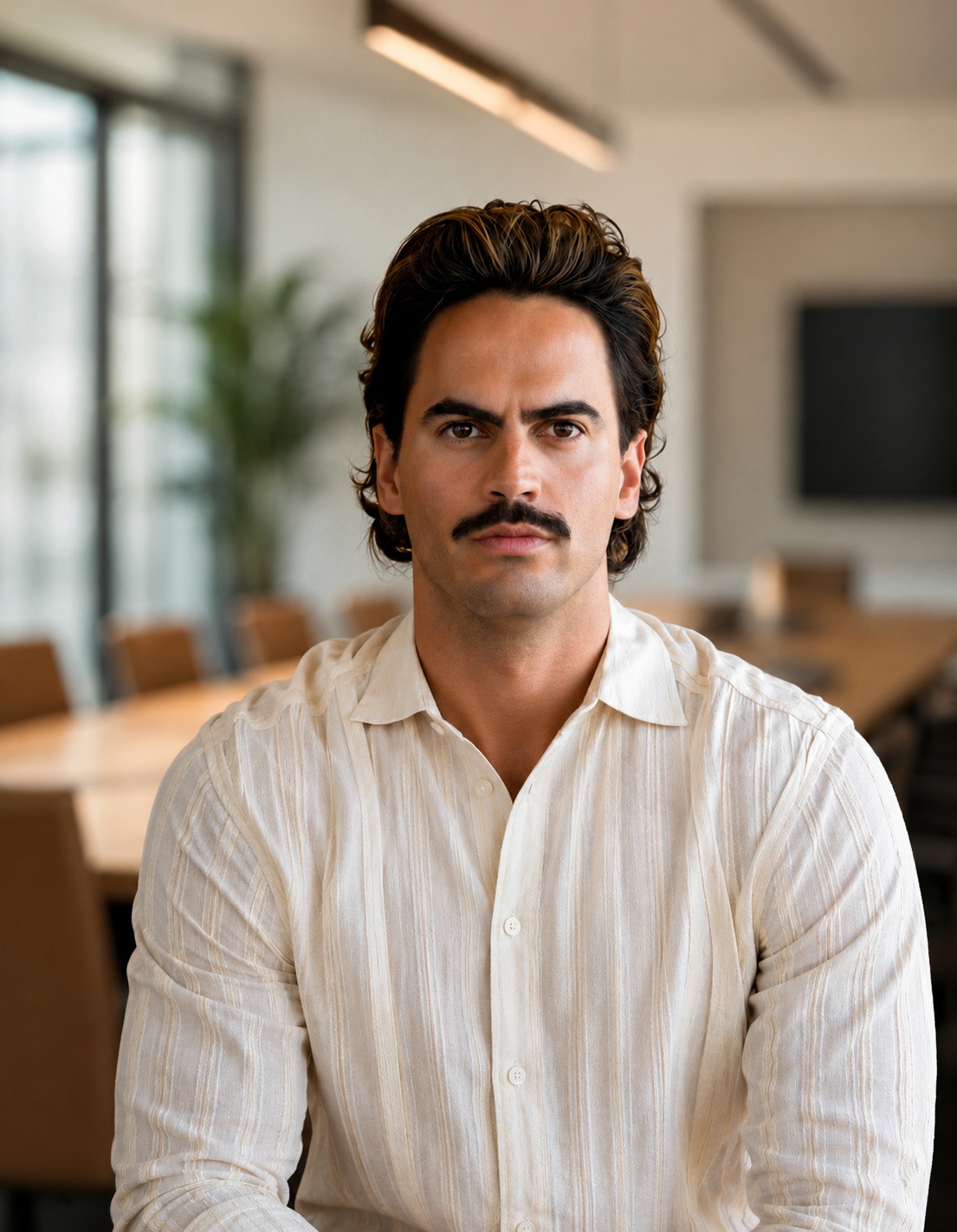
Nick Farkas, portrait

Nick Farkas, Los Angeles

Ask Nick Farkas what he does, and he'll tell you it isn't marketing — not in the way the word gets used in most conference rooms. It's closer to translation. Taking what a company believes about itself and finding the version of that belief a stranger would actually stop for.

Why brands, specifically — and not, say, products, or performance, or any of the other things marketing careers tend to orbit? Because a brand is the one part of a business that has to hold together as a single point of view, even as everything underneath it changes. Get that right and growth, hiring, even pricing get easier. Get it wrong and no campaign fixes it.

That instinct didn't arrive fully formed. It was built — office by office, launch by launch, in rooms ranging from a beauty label's first packaging review to a boardroom deciding whether three hundred agents would actually use the tools they'd been given. Different industries, same question underneath: what does this brand deserve to become, and what's in the way of it getting there?

Why Marketing

He didn't choose marketing. He chose the one job where the business decision and the story are the same decision.

Nick's path into marketing wasn't a detour from something more serious — it was the most direct route he could find to the questions he actually cared about: why customers choose one company over an identical competitor, why some organizations earn trust and others just ask for it, why the businesses that seem to get luckier are usually the ones that were clearer about what they stood for. Marketing turned out to be the discipline sitting closest to all three.

What kept him there wasn't the craft alone. It was watching, early and often, how directly a brand decision could move a business outcome — a repositioning that opened a retail conversation, a piece of packaging that became the only ad a company never had to pay for twice. That link between story and outcome is what he's spent a career trying to make tighter.

Brand as Strategy

A brand isn't the department that makes things look good. It's the decision every other department has to agree with.

Nick treats brand as business strategy, not as the layer applied after the strategy is already decided. A clear brand point of view is what lets pricing hold, lets a retail buyer say yes faster, lets a new hire understand what "good" means without a policy document. When that point of view is missing, every function ends up inventing its own version of the company — and no amount of creative execution fixes a business that disagrees with itself.

That's the case he's made inside a 300-person real estate network and inside a company he founded from nothing: the brand conversation belongs in the same room as the commercial one, because eventually they're the same conversation anyway.

Curiosity

He reads a category before he redesigns it.

Every engagement starts the same unglamorous way — in the aisle, in the inbox, in the comment section, wherever the actual customer is telling the truth about what they want. Nick treats that research as the interesting part, not the obligatory part. The strategy usually turns out to be less about invention and more about noticing what a category has quietly agreed to ignore.

Taste

Restraint is a decision, not an accident.

A recurring note in Nick's creative reviews: take something out. Not because less is trendy, but because a brand that tries to say everything ends up saying nothing memorably. He'd rather ship one confident idea than five hedged ones — a preference that shows up in the packaging he's directed, the campaigns he's greenlit, and the meetings he's ended early because the point had already been made.

This is where strategy and creativity stop being separate disciplines for him. A strategy without taste never gets made. Taste without strategy never gets defended in the room that matters — and the two only work as one input into a business decision, not as two departments taking turns.

Founder & Enterprise

He's built the same discipline at two very different speeds.

Founding Churriño meant every brand decision was also an inventory decision, a retail decision, a partnership decision — there was no function to hand it to. Leading marketing inside Coldwell Banker's 300-person network meant the opposite problem: the decision was easy to make and hard to make stick, because it had to survive contact with people who didn't report to him and workflows he didn't design. Startups taught him to move fast. Enterprise taught him to move an entire organization. Neither instinct is complete without the other, which is why he's built a career refusing to specialize in just one.

2024 — Present

Independent Marketing Advisor

Advising luxury, beauty, hospitality, and technology companies on brand strategy, creative direction, and AI-enabled marketing transformation.

2018 — Present

Coldwell Banker Realty

Leading marketing strategy and organizational transformation for one of the nation's largest luxury real estate networks, supporting 300+ professionals.

2018 — 2022

Vanity Planet & Branche Beauty

Directed brand repositioning and go-to-market strategy that took two beauty brands into national retail, including Walmart and BlueMercury.

2017 — Present

Founder, Churriño

Founded and led an international consumer brand end-to-end — brand strategy, product innovation, customer experience, marketing, and commercial operations — scaling from concept to national retail and an entertainment partnership with Disney Theatrical.

View the Full Résumé

Growth & Leadership

He measures leadership by what a team can do without him.

The work Nick is proudest of rarely has his name on the byline. It's the technology adoption curve that kept climbing after the rollout ended. The agent who ran with a campaign framework and made it better than the original brief. Growth, to him, isn't a channel — it's what happens when a team finally trusts the brand enough to defend it under pressure, without waiting for permission.

“The brands that win aren't the loudest. They're the ones people choose again — because someone bothered to understand them first.”

Nick Farkas