
Marketing Operations
Leading the marketing organization and operational rebuild for a 300+ person luxury real estate network — aligning leadership, redirecting a $350K budget, and turning technology adoption into measurable growth.
3300 Ocean Boulevard, Corona del Mar — relisted and sold by the rebuilt marketing system.
Three hundred agents, a fragmented toolkit, and a budget that had been spent the same way for years. The fix wasn't a bigger campaign — it was fewer tools, asked of people less often.
01 — Overview
Coldwell Banker's regional network of 300+ agents was operating on a fragmented marketing toolkit and a budget spent the same way for years. I led the rebuild — consolidating the technology stack, redesigning the rollout as change management rather than software deployment, and taking technology adoption from 35% to 85% across the organization.
02 — Business Challenge
A regional network of 300+ agents was operating on fragmented, inconsistent marketing tools. Technology adoption sat at 35%. Lead follow-up was manual and inconsistent, and the brand experience varied wildly by office.
03 — Opportunity
A unified technology stack, paired with training that treated agents as brand practitioners rather than end users, could turn a $350K budget into compounding organizational leverage instead of one-off campaign spend.
04 — Research
Office-by-office audits and agent interviews I ran surfaced the real adoption blocker: not capability, but complexity — the tools already existed, but the path to using them didn't. That finding, more than any vendor pitch, set the direction for everything that followed.
05 — Strategy
I made the call to consolidate onto a single CRM and content system, then build the adoption path around the workflow agents already had — reducing new tools from a stack of ten to a system of one, so the plan didn't require anyone to change how they worked, only what they worked in.

317 Aliso Avenue — a record price per square foot for Newport Heights.
“You don't scale adoption by asking people to want it more. You scale it by asking less of them.”
Nick Farkas
06 — Creative Direction
The brand's local marketing — listing presentations, email systems, social templates — had splintered into hundreds of personal interpretations across offices. Consolidating it into one on-brand system any agent could pick up in minutes wasn't a design exercise; it was the mechanism that made the technology decision stick.

The property marketing system — one template library, deployed across every listing.
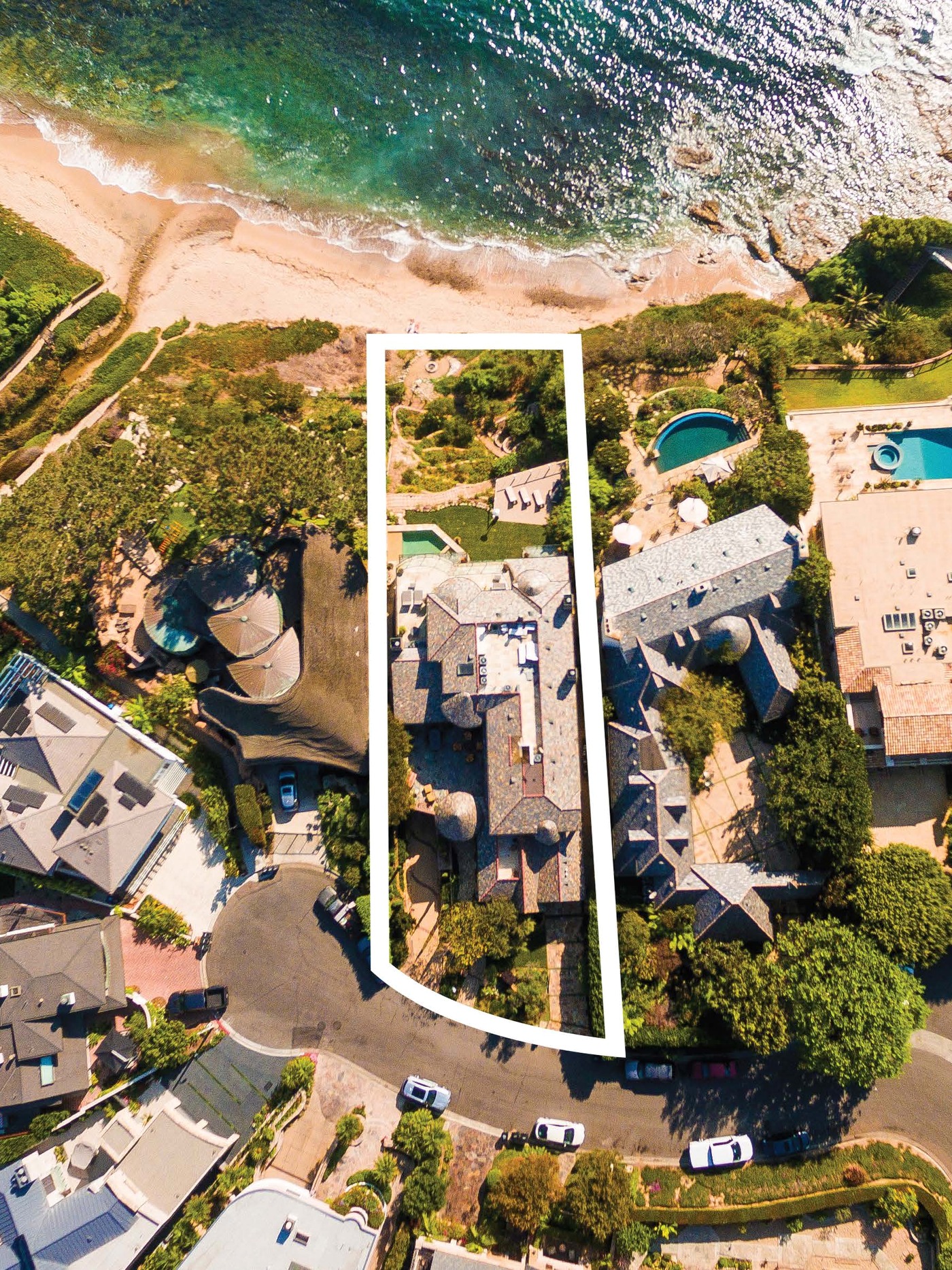
177 Shorecliff Road — the highest recorded sale for Corona del Mar in 2022.
07 — Execution
Rolling out a single system across a 300+ person network meant aligning regional broker leadership on the budget shift, working with the technology vendor on implementation, and recruiting office-level champions to carry the change locally rather than mandating it from the top. Training itself moved in phased cohorts with live coaching, not a single all-hands mandate — the pacing was as much a leadership decision as the technology choice itself.
08 — Marketing Rollout
The email program followed the same logic as everything else in the rebuild: fewer, sharper sends instead of volume, on the belief that agents and their clients would trust a system that respected their attention. Open rates moved well above industry benchmark as a result — not because the content changed, but because the discipline behind it did.

The templated system any agent could execute in minutes.

The digital reach it earned.
09 — Business Results
35→85%
Technology Adoption
34%
Email Open Rate
300+
Professionals Trained
The adoption curve was the leading indicator; the durable outcome was an organization that now runs on one system instead of ten, with a brand experience consistent across every office.
10 — Lessons Learned
Adoption isn't a training problem. It's a change-management problem wearing a training problem's clothes. Simplify the system first, and the training takes a fraction of the time and sticks far longer. Leading change across 300+ people also taught me that a mandate moves compliance; a coalition of local champions moves culture — and only one of those outlasts the person who issued it.
It's tempting, leading a network this size, to solve adoption problems with authority — set the mandate, measure compliance, move on. What I learned instead is that authority gets you a launch date; it doesn't get you a habit. The organizations that actually change are the ones where the people closest to the work become the ones carrying the change forward, not the ones being managed through it.
Most of all, this project confirmed a first principle I still hold: complexity is rarely a resourcing problem. It's usually a leadership problem that's been allowed to compound, quietly, for long enough that everyone assumes it's permanent. Somebody has to be willing to ask why ten tools became necessary in the first place — and spend the political capital it takes to say one is enough.
Gallery
Coastal Orange County — the territory the network was rebuilt to represent.
Next Project
Vanity Planet →